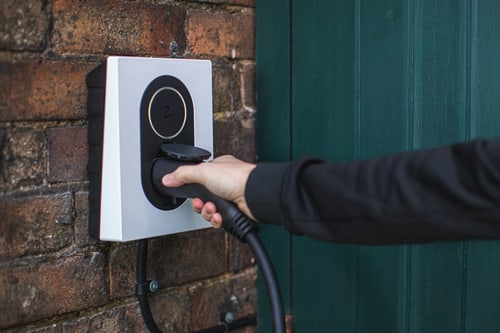
If you are putting a Level 2 charger in your Santa Ana garage or driveway, you almost certainly need a permit. A home EV charger runs on a dedicated 240-volt circuit wired back to your electrical panel, and that is exactly the kind of work California building and electrical codes require a licensed electrician to permit and have inspected. The good news is that Santa Ana, like every California city, runs a streamlined process built specifically for EV chargers, so a straightforward residential job moves quickly. This guide walks through when a permit is required, how to apply in Santa Ana, what the inspection covers, and why the paperwork protects your home, your insurance, and any rebate you are counting on.
Do You Need a Permit to Install a Home EV Charger?
Yes. In California, hard-wiring a Level 2 EV charger or adding a dedicated 240-volt outlet for one is electrical work that requires a permit and a final inspection, because it adds a new circuit to your home's service. The U.S. Department of Energy's Alternative Fuels Data Center is explicit that an electrical contractor should obtain a permit from the local building authorities before installing charging infrastructure, and that the work must comply with state and local codes. The only home-charging setup that typically does not need a permit is a basic Level 1 cord plugged into an existing, code-compliant 120-volt outlet, since no new wiring is involved. The moment an electrician installs a 240-volt circuit, a new breaker, or a NEMA 14-50 receptacle for charging, a permit applies. Treating that as optional is the single most common mistake Santa Ana homeowners make.
What Santa Ana Requires: Building and Electrical Permits
Santa Ana issues EV charger permits through its Building Safety Division, and a typical home install needs both a building and an electrical permit. According to the City of Santa Ana's EV charging station page, applicants must complete the building and electrical applications and submit site and electrical plans, including a single-line diagram and an electrical load calculation worksheet. The site plan has to be drawn to scale and show where the panel and the charger sit, the charger type, and how it is mounted. The load calculation matters most on Santa Ana's older housing stock: many homes here were built decades before anyone charged a car at home and may not have spare capacity on a 100- or 125-amp panel. If yours doesn't, the fix is a service or electrical panel upgrade for EV charging submitted alongside the charger permit, which your electrician handles as part of the same application.
How Santa Ana's Expedited EV Permit Process Works
California law requires every city to make EV charger permits fast, and Santa Ana has adopted an ordinance to match. Under state law AB 1236, codified in Government Code 65850.7, cities must adopt an expedited, streamlined permitting process and a published checklist for EV charging stations, and must limit their review to legitimate health and safety concerns rather than discretionary design judgments. Santa Ana brought itself into compliance by adopting a streamlining ordinance and a One and Two Family Residential EVCS Expedited Review Eligibility Checklist. If your project clears that checklist, review is largely administrative. The companion law, AB 970, sets deadlines: for a small residential project the application is deemed complete about five business days after submission unless the city issues a written deficiency notice, and it is deemed approved roughly twenty business days after that. In practice, a clean application for a single home charger is one of the quicker permits the city issues.
Submitting Your Application in Santa Ana
You can apply either online or in person. The city accepts electronic submittals through its Building Safety electronic plan check request form, and staff advise that you wait up to three days for an email notification after you submit. If you prefer to file at the counter, the Building Safety Division public counter is open mornings most weekdays, and City Hall's general line is (714) 647-5400 if you need to confirm hours or which checklist applies to your job. Most homeowners never deal with the city directly, though. A licensed electrician doing your Level 2 EV charger installation pulls the permit, prepares the single-line diagram and load calculation, and schedules the inspection as a normal part of the job, so the permitting is folded into the quote rather than left to you.
The Inspection: What the City Checks and Why
After the charger is installed, the work has to pass a final electrical inspection before the permit is closed. The inspector confirms the installation meets the National Electrical Code, which the 2021 International Building Code requires EV charging equipment to follow, installed in accordance with NFPA 70 and UL listed. In practice that means checking the dedicated circuit and breaker are correctly sized for the charger's amperage, the wire gauge and conduit are right, the equipment is a listed and labeled product, the grounding and bonding are correct, and the charger is mounted and located safely. These are the exact details that cause a fire or a nuisance trip when they are wrong, which is why the city looks at them rather than taking the installer's word. A professional install is built to pass on the first visit; a DIY or unpermitted job is where inspectors routinely find undersized wire and overloaded panels.
Why the Permit Protects You Long After the Install
The permit is not just a formality; it protects three things that matter later. First, safety: a permitted, inspected circuit is verified to code, so you are not relying on hope that a 240-volt circuit in your home was done right. Second, insurance: if an unpermitted electrical modification contributes to a fire, a homeowner's insurer can question or deny the claim, and the permit is your proof the work was done and inspected properly. Third, resale: unpermitted electrical work surfaces during a home sale and can stall escrow or force you to pay for retroactive permitting and corrections under pressure. There is a fourth, immediate payoff too, since the main Santa Ana and regional EV charger rebates, including SCE and South Coast AQMD programs, require a permitted installation by a licensed electrician, so skipping the permit can disqualify hundreds or thousands of dollars in incentives.
What to Line Up Before the Install
The practical path is short: confirm your panel has capacity for a 240-volt circuit, plan the charger location, and hire a licensed electrician who will pull the permit and handle the inspection rather than one who offers to skip it. If your panel is full or near its limit, fold the upgrade into the same permit so the whole job is inspected once. The permit fee and the few weeks of lead time are small next to the cost of an uninspected circuit that voids a rebate or an insurance claim. When you are ready to size a charger to your home and keep the whole job permitted and inspected, that is where Santa Ana EV Charger and its Level 2 EV charger installation and electrical panel upgrade work come in.
Santa Ana EV Charger Permit: Quick Reference
- A permitted, inspected 240-volt circuit is required for a Level 2 home charger; only a basic Level 1 cord in an existing outlet usually is not.
- Santa Ana needs both a building and an electrical permit, with a site plan, single-line diagram, and load calculation.
- Under AB 1236, the city uses an expedited One and Two Family Residential EVCS checklist, and AB 970 sets fast approval deadlines.
- The final inspection verifies the circuit, breaker, wiring, grounding, and that the charger is UL listed and installed to NFPA 70.
- A permitted install protects your insurance and resale, and is required to qualify for SCE and South Coast AQMD rebates.
Unpermitted Work Can Void Your Rebate
Both the SCE and South Coast AQMD home charger rebates require a permitted installation by a licensed electrician. An unpermitted or DIY charger can be disqualified after the fact, so pulling the permit is not just about passing code, it keeps the incentive money in play.
Not Sure Whether Your Charger Needs a Permit?
Tell us your panel, your vehicle, and where the charger needs to go, and we'll confirm exactly what Santa Ana requires and handle the permit and inspection for you.